
Phononic: Advancing Cooling Technology for AI Data Centres
March 12, 2026
Phononic is expanding their cooling solutions portfolio for AI data centres
Solid-state cooling specialist Phononic is adding to its portfolio for GPUs and co-packaged systems as AI data centres manage rising heat and power loads
Phononic is expanding its solid-state cooling portfolio with systems aimed at high-density AI data centres, as growing thermal demands inside hyperscale facilities continue to rise.
The firm already deploys systems across major hyperscale operators and is introducing several additions designed to manage heat at chip, node and rack level.
These include GPU high bandwidth memory cooling, high-performance pluggable optics for 1.6T networks and a thermal system designed for co-packaged optics.
In modern AI data centres, cooling efficiency is central to both performance and operating costs. Phononic states that its GPU high bandwidth memory solution reduces power usage effectiveness (PUE) by up to 0.15 while extending component lifetime and improving compute output.
Cooling demands of AI data centres
AI training clusters and large-scale inference workloads place intense thermal pressure on infrastructure. As racks carry more GPUs and accelerators, the heat produced by memory and processors quickly becomes harder to control.
Phononic is addressing this challenge with its Gen 2 GPU high bandwidth memory cooling solution. High bandwidth memory (HBM) is a type of stacked memory used in AI accelerators to deliver extremely fast data transfer rates. However, the dense packaging that enables this performance also concentrates heat.
The Gen 2 system integrates Phononic’s Thermal Kit as a core subsystem. According to the company, it provides 75% greater cooling capability. The increase allows GPUs to sustain higher performance levels while reducing thermal throttling, which happens when processors lower speed to prevent overheating.
Phononic has also created a thermal kit for co-packaged optics (CPO). This design shortens signal paths, reduces energy use and increases bandwidth density.
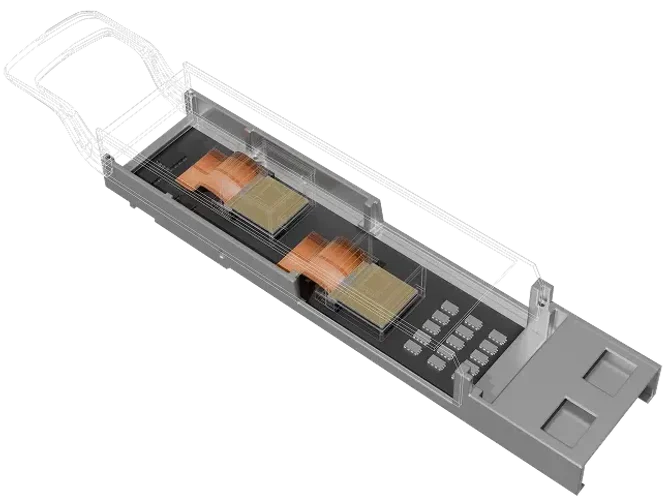
By maintaining more stable temperatures, the system aims to improve the reliability of GPU clusters that underpin AI training environments. The approach also fits into existing server hardware, nodes, chassis and rack configurations.
Data centre operators can adjust cooling performance dynamically, allowing them to manage PUE, compute performance and hardware lifespan across an entire facility.
Matt Langman, SVP and GM of Infrastructure Solutions at Phononic, says: “Our customers are operating at the bleeding edge of AI compute.

“The Thermal Kit gives them precise, node-level control over heat.
“For GPU Thermal Kits in particular, the combined ROI gains and PUE improvements open a new frontier of efficiency for high-density AI infrastructure.”
GPU memory, optics and co-packaged systems
Beyond GPU memory cooling, Phononic is expanding its portfolio into optical networking components that connect large data centre clusters. AI infrastructure relies on high-speed optical links to move massive data volumes between servers and accelerators.
The company introduces high-performance pluggable optics that support 1.6T connectivity. These optical modules manage more than 50% higher heat loads while maintaining power consumption levels.
Thermal stability is essential for optical transceivers because temperature variation can affect signal quality and device lifespan.

Thermal Fabric and real-time control
Alongside hardware products, the company introduces a platform called Thermal Fabric. The system links cooling hardware with telemetry and control software to manage temperatures across infrastructure in real time.
In large AI clusters, heat levels can change rapidly as workloads move between GPUs or accelerators. Phononic’s platform monitors thermal data and adjusts cooling with millisecond response times.
Ryan Parker, President & COO of Phononic, explains its benefits.

“Phononic is introducing a real-time thermal control platform that transforms cooling from a reactive cost center into a system level intelligence layer without the instability tax.
“By converting thermal demand into a predictive signal, our Thermal Fabric enables sustained performance, extends infrastructure life, increases uptime and unlocks materially higher energy efficiency across the fleet.
“The next gains in AI performance will not come from more silicon alone, but from mastering the physics that governs it.”
The platform uses two-way telemetry, which is a system where devices both send and receive operational data, to tune cooling continuously. By predicting heat output from workloads, the system adjusts cooling before temperatures reach limiting thresholds.
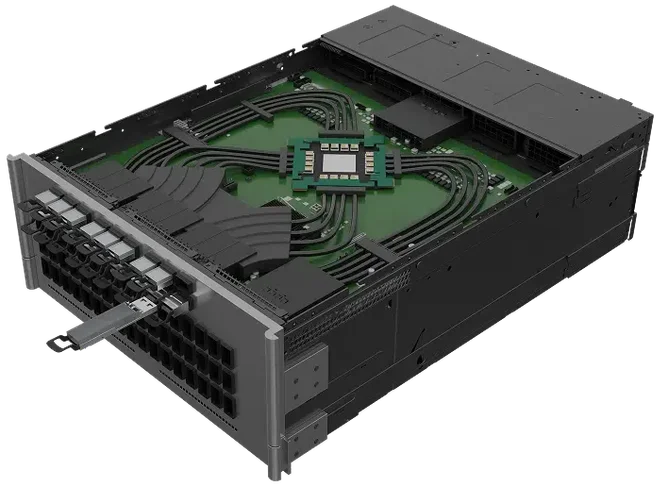
This approach enables facility-level optimisation for data centre operators. Water temperatures within cooling loops can rise while chip temperatures remain controlled, which improves energy efficiency across the building.
At the same time, stable thermal conditions help maintain consistent compute performance and extend equipment life.
Through this combination of chip-level cooling hardware and real-time control software, Phononic is targeting the growing thermal pressures created by high-density AI infrastructure in hyperscale data centres.